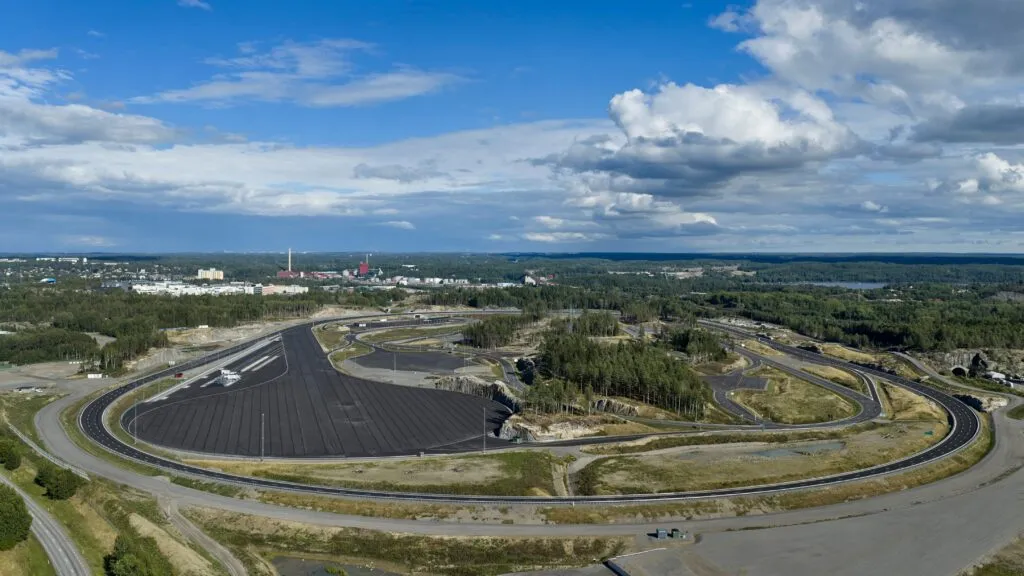
Scania has inaugurated a new R&D proving ground in Södertälje, Sweden, representing an investment of approximately SEK 975 million (around GBP 74.4 million) by the Traton Group. The 85-hectare facility was opened on October 19, 2026, with vehicles on track rather than a traditional ribbon-cutting ceremony.
Scania Consolidates EV and Autonomous Testing at New Södertälje Proving Ground
The facility adds 13 kilometres of paved roads and 4 kilometres of gravel roads, with 230,000 m² of paved test surfaces and 54,000 m² of gravel surfaces. It is designed to support testing across electrification, autonomous systems, active safety, vehicle dynamics, and conventional technologies, consolidating work that previously required external test facilities.
For vehicle dynamics, the site includes large purpose-built surfaces and banked curves with gradients of up to 22 per cent, configured as an oval that drivers experience as a straight, endless highway. Three irrigated braking tracks, surfaced in asphalt, concrete, and basalt tiles respectively, allow braking tests at different friction levels on each side of a vehicle, with the basalt section including a curve for cornering brake tests. A flexible environment supports testing of advanced driver assistance systems including automatic emergency braking, lane support, and blind-spot warning, as well as gradually scalable autonomous driving scenarios.
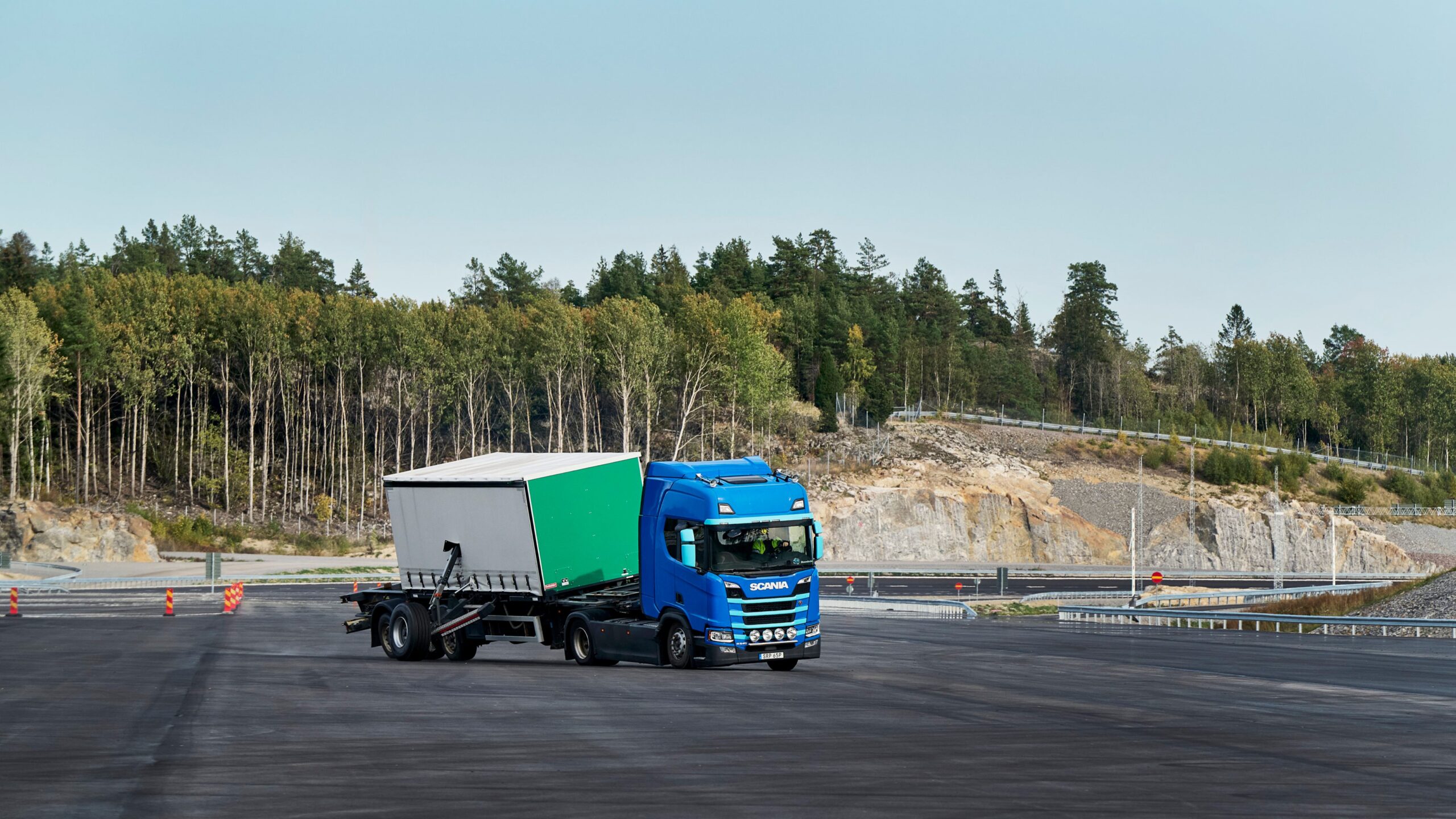
Christian Levin, President and CEO of both Traton Group and Scania, said the investment is about building the capabilities needed for future transport development while maintaining the safety, quality, and performance standards customers expect. “The transformation of transport requires us to continuously strengthen the way we develop and validate new technologies,” he said.
Sara Forsberg, CTO and Head of Brand Identity Development at Scania, added, “New technology only creates value when it performs in the real world. The R&D proving ground gives our engineers greater possibilities to test, learn and validate solutions under demanding conditions. It strengthens our ability to turn innovation into solutions that deliver real value for our customers.”
Environmental considerations were incorporated into the construction process, including the use of ECO asphalt and HVO100 fuel for transport, which Scania says avoided approximately 30,900 tonnes of CO2e during the build.